Brachychiton acerifolius
Flame tree, Australian flame tree, Flame bottle tree, flame kurrajong, Illawarra flame tree
Description
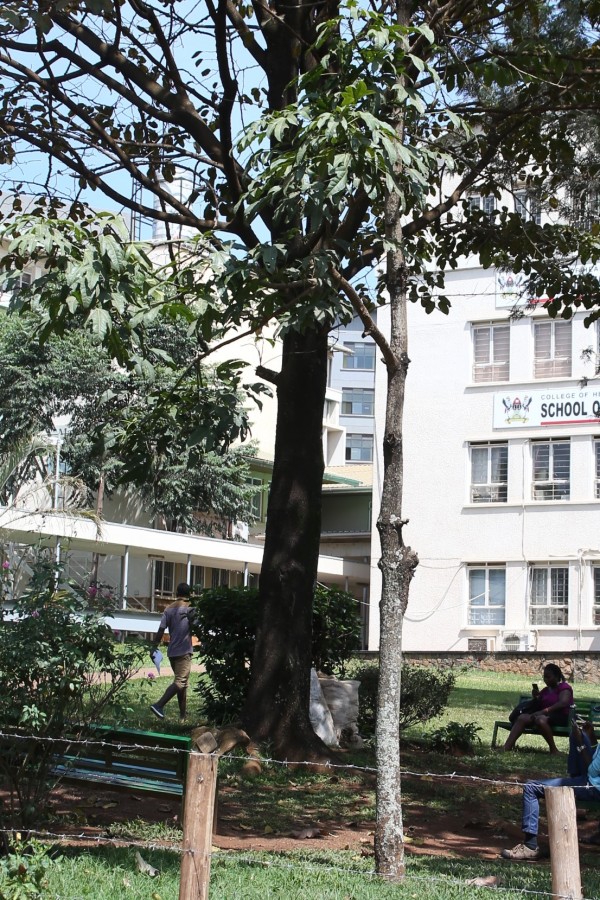
Flame tree is a semi-deciduous tree growing up to 35 meters tall. The tree loses its leaves prior to a heavy flowering, which only happens every few years. The straight, cylindrical bole can be 70cm in diameter and a crown width of between 4 and 10 m.
BARK: cylindrical but may be slightly flanged at the base and gives a hollow sound when tapped.
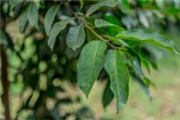
LEAVES: smooth and glossy, variable in shape even on same plant -- from simple (un lobed) up to 9 lobes, typically 3, 5 or 7 lobes, leaves on mature trees tend to be less lobed than those on juvenile plants.
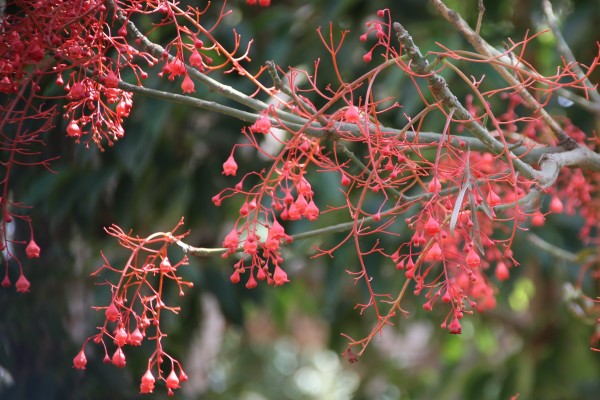
FLOWERS: Scarlet-red, bell-shaped, petal-less, with 5 partially-fused waxy sepals, produced in large terminal panicles on leafless branches. Blooming may be partial and with varying intensity, but whole tree may be spectacularly covered with flowers after prolonged period of dryness.
FRUIT: Dry woody explosive capsules, dark brown or black when mature, with many yellow corn-like seeds surrounded by interlocking irritant or stinging bristles.
Uses
Edible: seeds can be roasted and eaten. http://tropical.theferns.info/viewtropical.php id=Brachychiton+acerifolius
A fiber from the inner bark can be used to make twine for fishing nets and fishing lines.
Fiber is used for cordage and nets, ropes, mats, baskets, etc. It is also useful as a paper material.
A gum resembling gum tragacanth ( Astragalus spp. ) in appearance exudes from the trunk.
A dye is obtained from the seed vessels.
Provides timber used for plywood, in model making as a substitute for balsa wood and to make hat blocks.
An ornamental tree.
Ecology
Flame tree is native to some parts of eastern Australia (i.e. the coastal and sub-coastal districts of Queensland and some parts of eastern New South Wales). In Kampala, this tree can be found along Muwafu road, Phillip road among other places.
Management
Pinching which is removing the stem tips of a young plant to promote branching. Doing this avoids the need for more severe pruning later on watering to prevent drying of the young ones.
Tree gallery
.jpg)
.jpg)