Citrus sinensis
Orange
Luganda: Muchungwa.
Description
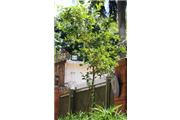
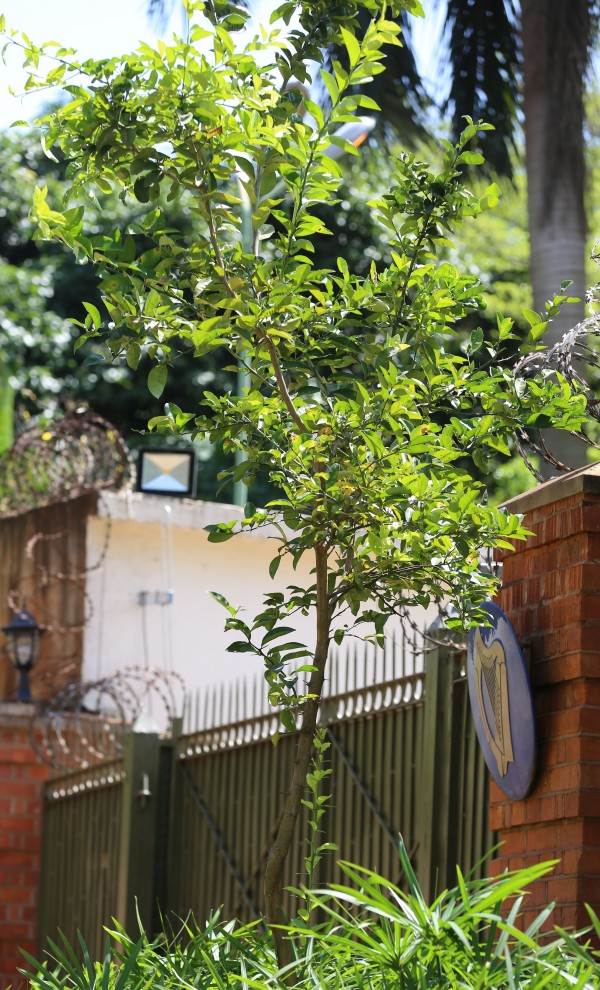
An evergreen shrub or tree, 6-12 m with dense foliage and rather thin spines beside the leaves, twigs angled when young, often with thick spines. The trunk can easily be damaged from mechanical impact.
BARK: thin; droop as the tree grows, routinely grown with, or trainable to be grown with, multiple trunks; not particularly showy; tree wants to grow with several trunks but can be trained to grow with a single trunk; thorns are present on the trunk or branches.
LEAVES: oval, 5-15 cm x 2-8 cm, shiny dark green above, the stalk narrowly winged, having a line or break with the leaf blade (articulation).
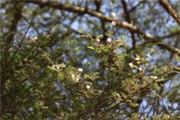
FLOWERS: very fragrant, one or many in leaf axils, 2-3 cm across, 5 white petals, 20-25 stamens in groups.
FRUIT: rather variable in color and shape, rounded green-yellow-orange, 4-12 cm across, the relatively thin skin hard to remove, the pulp surrounding the seeds sweet-sour but juicy.
Uses
Edible: fruit eaten raw or juice is extracted from the it and sold as a refreshing and healthy drink or used in jellies, ice cream etc, the dried and pulverized fruits are used for flavouring baked goods, essential oil extracted from the peel of the fruits is used for flavouring drinks, ice-cream, pudding, desserts, chewing gum, and sweetmeats, pectin, a setting agent, is made from the peel, the rind of the fruit is often candied and used as a flavouring in cakes etc or made into marmalade, flowers can be cooked as a vegetable or made into a tea, an oil extracted from the seeds is used as a cooking oil. http://tropical.theferns.info/viewtropical.php id=Citrus+sinensis
Medicine: the fruit, fresh rind and dried peel, fruit juice, leaves roots, bark, and leaf oil. http://tropical.theferns.info/viewtropical.php id=Citrus+sinensis
A semi-drying oil obtained from the seed is used in soap making.
An essential oil from the peel is used as a food flavouring and also in perfumery and medicines.
The leaves and flowers also contain fine essences of oils that may be used in the manufacture of cosmetics.
A potential source of firewood.
The wood can be used for boards and paneling.
Ecology
Sweet orange is a native of southern China or Cochin China. It is now grown widely throughout the tropics and subtropics but is no longer known in the wild. Orange trees produce more fruit with irrigation. In Kampala, Citrus sinensis can be found along Ridgeway drive, Old Kira road, Lumumba avenue, within Kitante courts, National Housing and Medical quarters among others.
Management
Pruning to encourage branching and keep the tree low. This allows easy harvesting of the fruit. Irrigation and pesticides are required to control diseases. In the past much citrus has been grown from seed, but now it is common practice to grow from budding. Rootstock seeds are sown into seed beds and later transplanted into poly-pots for 5-6 months. Rough lemon is the most commonly used rootstock. They may be budded after a further 6 months. Small or unhealthy seedlings should be discarded. Rootstocks of grapefruit are used in waterlogged places.
Tree gallery
.jpg)
.jpg)