Dracaena fragrans
Dragon tree
Luganda: Mpaanyi, mulamula Runyoro: Mulamula Rutoro: Muramura.
Description
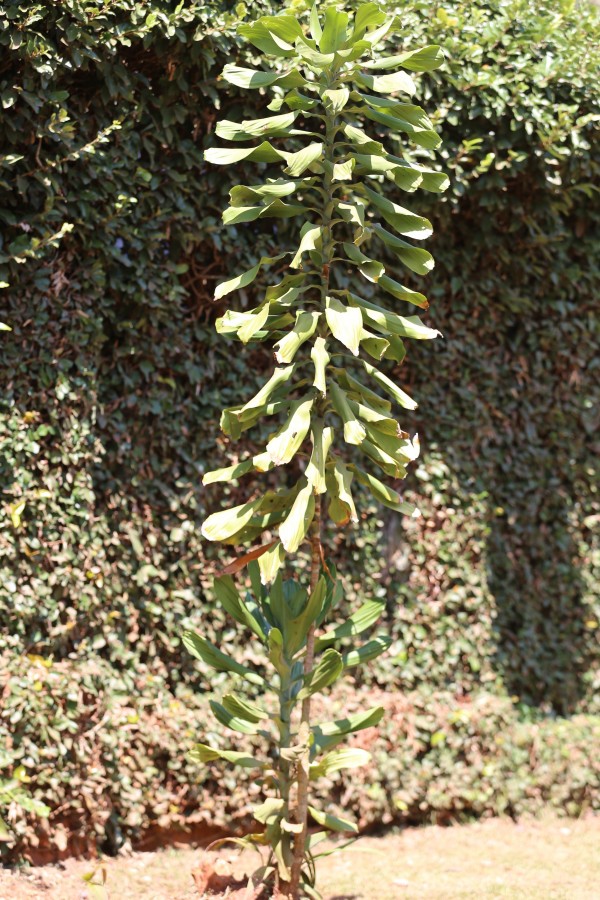
An evergreen shrub or tree, usually 3-5 m (15-18 m). Vertical leafy stems grow from a tangled mass of horizontal wood y stems at ground level.
BARK: smooth, pale, ringed by leaf scars, soft and juicy if cut.
LEAVES: usually 30-50 cm long, 4-10 cm wide, base narrow and surrounding the stem, tip pointed, leathery, arranged spirally and not markedly clustered at ends of branches (as D. steudneri).
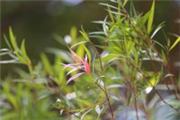
FLOWERS: flower stalk erect, usually 18-25 cm (40-100 cm), mostly unbranched, flowers in dense clusters, very fragrant, petals white or pink with a central darker pink stripe, anthers yellow, flower tubular with 6 lobes in 2 whorls.
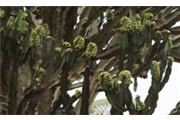
FRUIT: rounded orange fleshy berries, about 2 cm, sometimes lobed, on thick stalks.
Uses
An ornamental tree.
Agroforestry: can be planted as a hedge, used in boundary marking.
Ecology
Dragon tree is indigenous to Uganda. This is one of several East African species in a monocotyledon family, unusual in having secondary thickening in the stems and with leaves growing spirally from the stem. It is abundant as an understorey shrub of wet, lower-altitude tropical rain forest. Common throughout south Mengo, often forming a dense thicket that excludes other shrubs. In Uganda, it has also been cultivated over a long period and planted by tombs and shrines and as a traditional boundary marker or hedge. In Kampala, Dragon tree can be found within Makerere university among other places.
Management
Fast growing. The plant is managed from cuttings or wildings as a boundary marker or as a hedge.
Tree gallery
.jpg)
.jpg)
.jpg)