Funtumia africana
Bush rubber, False rubber, Male funtum, Lagos rubber, Bastard wild rubberLuganda: Nkago
Lusoga: Nkago Rukiga:Munyamagosi Runyankore: Munyumatuga,nyamukago Runyoro: Musanda.
Description
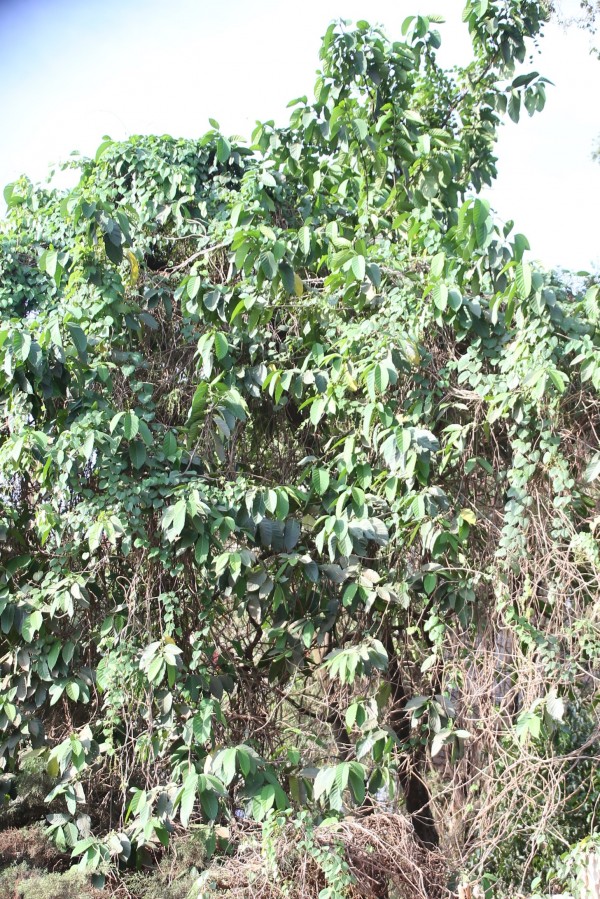
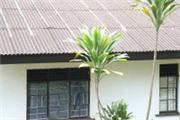
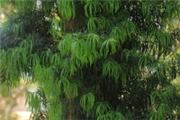
An evergreen tree usually 8-25 m, the trunk cylindrical (only slightly buttressed in large trees) to a tall, narrow but dense crown, the leaves crowded on short dark branchlets.
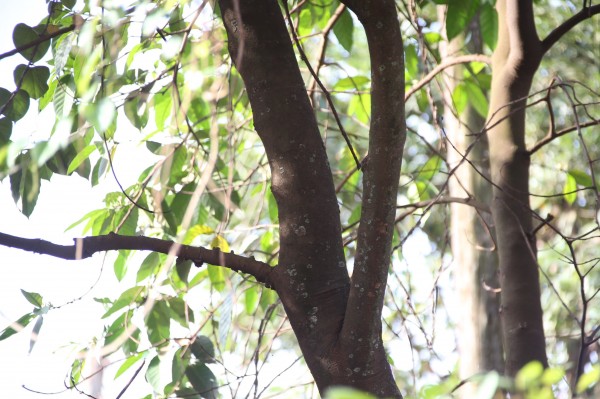
BARK: smooth and thin, brown-black, granular when older, fine vertical fissures. A thin chalk-white latex exudes when cut which remains sticky on the fingers.
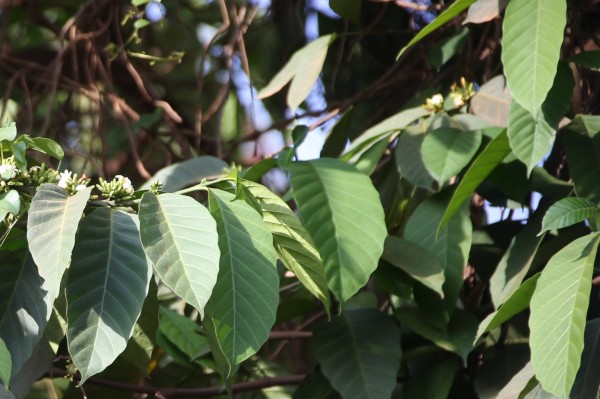
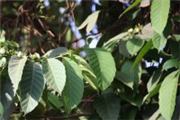
LEAVES: opposite, leathery dark green above, broadly oval, usually 18-20 cm long, edge wavy, tip slightly pointed, a stalk about 1 cm. Below 8-14 pairs lateral veins with a few hairs at the angles with the midrib (no pits).
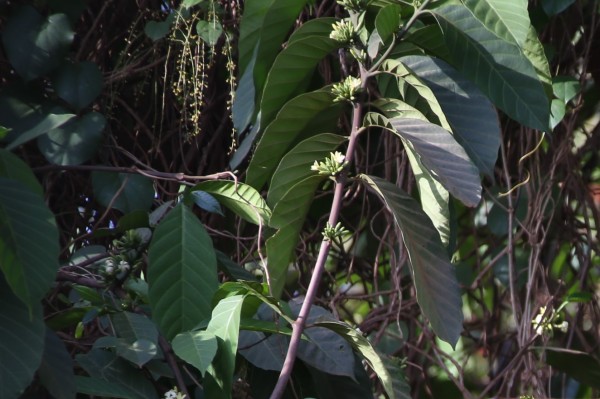
FLOWERS: yellow-white, fragrant and fleshy, about 1.5 cm across, the tube thick, mouth narrow, the petal lobes longer than the tube and overlapping to the right.
FRUIT: a pair of grey-brown, woody flat follicles, sharp-tipped, usually 9-15 cm long, boat-shaped, standing out at right angles from a common stalk. The fruits split along the upper side setting free very many seeds, each with a tuft of 5 cm long silky hairs at one end aiding wind dispersal.
Uses
Medicine: roots, dried powdered leaves. http://tropical.theferns.info/viewtropical.php id=Funtumia+africana , http://www.worldagroforestry.org/treedb/AFTPDFS/Funtumia_africana.PDF
Agroforestry: provides a cool shade, its root system protects moist forest soil from erosion, the leaf litter improves the fertility of the surrounding soil, used in apiculture (fragrant yellow-white flowers are visited by bees for nectar and pollen).
A latex exudes copiously from wounds in the bark, though it cannot be used to make good quality rubber.
Produces gum or resin which is used as birdlime.
The seed pod contains a fine floss surrounding the seeds which is used for stuffing pillows.
The wood is used for carving, and for making items such as stools, bowls, clogs, doors, paddles, and miscellaneous household requirements.
The wood is used for fuel.
The latex is a weak ingredient and adherent for poisoned arrows .
Ecology
False rubber tree is indigenous to Uganda. It is widespread throughout much of tropical Africa in both evergreen and semi-deciduous forest. In Uganda it is commonly found in the middle storey of rain forests and is common in the Lake Victoria forest zone. In Kampala, False rubber tree can be found at Acacia avenue among other places.
Management
Fast growing. Pollarding.
Tree gallery