Mangifera indica
Mango
Luganda: Muyembe Lusoga: MuyembeRukiga: Muyembe Runyankore: Muyembe Runyarwanda: MuyembeRunyoro: Muyembe Rutoro: Muyembe.
Description
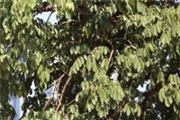
A densely leafy evergreen tree with a trunk soon branching to a rounded crown, usually 10-15 m. The long bole can be 60 - 120cm in diameter.
BARK: dark brown, cracking with age.
LEAVES: dark green, crowded at the ends of branchesto 30 cm long, smelling of turpentine when crushed. Young leaves are soft, copper-coloredand hanging limply.
FLOWERS: numerous and small in pink-brown pyramidal heads. Pollination is by flies and other insects.
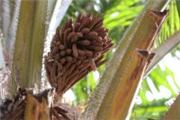
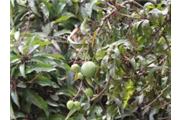
FRUIT: fleshy, 8-15 cm, the skin green-red yellow,the flattened "stone" is fibrous and woody around thelarge seed.
Uses
Edible: fruits which are eaten raw, juiced and can also be prepared in a variety of ways such as in chutneys, jams, pickles, seeds are used in the preparation of dodol, or pudding, young leaves can be cooked as a vegetable. http://tropical.theferns.info/viewtropical.php id=mangifera+indica
The bark and the leaves are the source of a yellowish-brown dye used for silk.
The flowers are used to repel mosquitoes.
The slender branches are used as toothbrushes to treat toothache.
The wood is used for indoor construction, meat-chopping blocks, furniture, carpentry, flooring, boxes, crates and boat building (canoes and dugouts).
The wood is a source of 'machang' timber.
Provides firewood and charcoal.
An ornamental tree and provides shade.
Agroforestry: Acts as a windbreak, helps in soil conservation, provides bee forage.
Source of gum.
Medicine: the leaves, seeds, the bark, roots, flowers and fruit. http://tropical.theferns.info/viewtropical.php id=mangifera+indica
Ecology
Mangifera indica is native to the Indian subcontinent where it is indigenous. It's one of the most important tropical fruit trees brought very early to East Africa. In Uganda, it is widely cultivated in Northern and North Eastern Regions. It does not tolerate flooding and prefers sandy-loamy soil which is well drained, but it can do quite well in dry areas. Roots penetrate deeply, so rocky subsoil should be avoided. The extensive shallow root collects water and nutrients in upper soil levels and grows well from 700 to 1,800 m. In Kampala, this tree can be found within Uganda Golf course club, Kitante courts, Makerere University, along Bombo Road, Kira road among other places.
Management
Fast growing tree. Lopping, grafting. For
quicker growth and early production of fruits, grafted material should be used.
Tree gallery
.jpg)
.jpg)
.JPG)
.JPG)
.JPG)
.JPG)