Strychnos mitis
Pitted-leaf strychnos
Kwamba: Wukebu, wulebu Luganda: Mukusakusa Lugishu: Akomya Rutoro: Mugangara.
Description
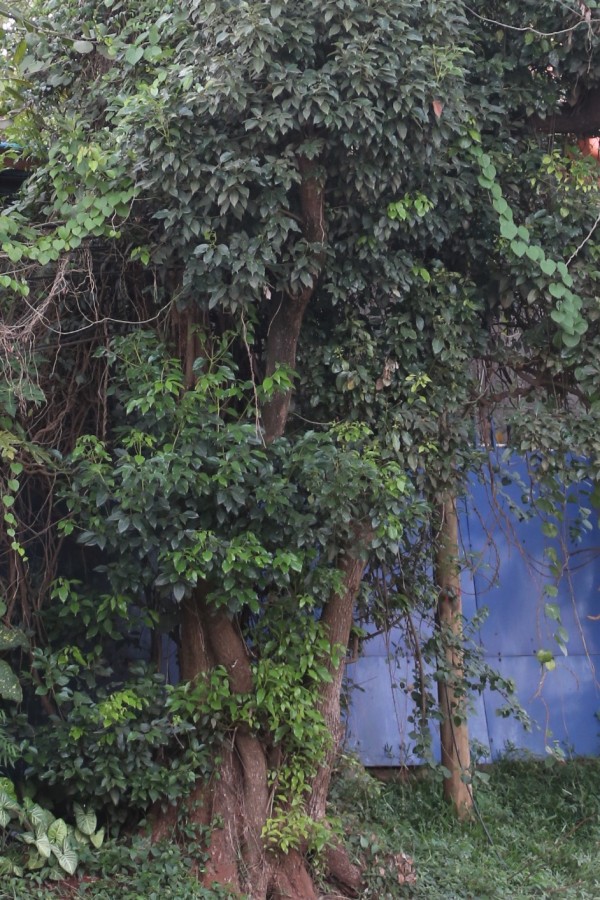
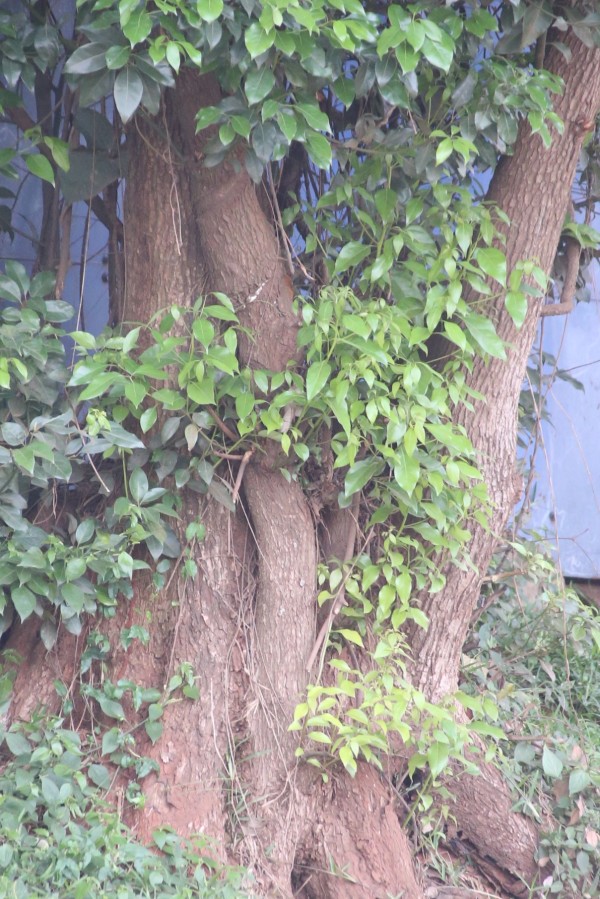
An evergreen forest tree 24 m or more high, the trunk usually crooked, with low branches and a spreading crown, trunks appearing twisted (like gum trees). The dense leafy crown resembles that of Cynometra . The base may be thick and fluted but there are no buttresses. (No spines.)
BARK: grey-brown, very thin and smooth, slightly flaking with age, under-bark often green.
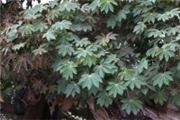
LEAVES : opposite, stiff, shiny above, long oval 4-11 cm long, tip usually pointed, a short stalk. All Strychnos have 3 veins from the base but the lateral pair in this species is faint, the pair above are much clearer, about 1 cm from the base.
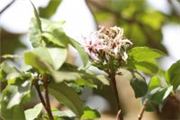
FLOWERS: white-cream, small and hairy, in dense heads, only 1.25 cm, usually terminal but also beside leaves.
FRUIT: yellow-orange, rounded to oval, 1-2 cm diameter; eaten by baboons.
Uses
The wood is a source of timber that is used for building poles, railway sleepers and tool handles. It is also suitable for flooring, joinery, interior trim, mine props, ship building, vehicle bodies, furniture, sporting goods, toys, novelties, agricultural implements and turnery.
The wood is used as firewood and for making charcoal.
Agroforestry: can be used as shade tree in coffee and cocoa plantations.
An ornamental tree.
The wood and roots are used in the preparation of ordeal poison and the sap is used to prepare arrow poison.
Provides poles.
Ecology
A forest tree common in tropical rain forest throughout East Africa, also in the Sudan and Zimbabwe. In Uganda, it is common in riverine forest in drier part of the country preferring shallow soils on murram. It is abundant on upper slopes in Kibale and Mabira forests and at the base of Mts. Kadam and Moroto. In Kampala, Pitted-leaf strychnos can be found along Lugogo bypass among other places.
Management
Pollarding and coppicing.
Tree gallery
.jpg)