Antidesma bunius
Currant Tree, Bignay, Bignay China Laurel, Currantwood, Cherry, Herbert River, Cherry, Chinese Laurel, Herbert River Cherry, Wild Cherry, Salamander Tree
Description
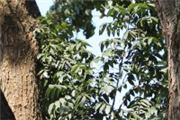
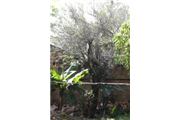
Antidesma bunius may be shrubby, 3-8 m high, or may reach up to 15-30 m. It has wide-spreading branches forming a dense crown.
BARK: Blaze layering usually quite conspicuous, consisting of alternate cream and pink layers.
LEAVES: evergreen, alternate, oblong, pointed, 10-22.5 cm long, 5-7.5 cm wide, dark-green, glossy, leathery, with very short petioles.
FLOWERS: tiny, odorous, reddish, male and female on separate trees, the male in axillary or terminal spikes, the female in terminal racemes 7.5-20 cm long.
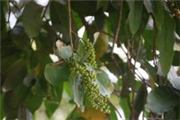
FRUITS: round or ovoid, up to 8 mm across, borne in grape-like pendent clusters (often paired) and which are extremely showy because the berries ripen unevenly. Fruit will change colour from yellowish-red, unripe, to bluish-violet, ripe. It is juicy and the skin is thin but tough.
Uses
Edible: Fruit, young leaves. http://tropical.theferns.info/viewtropical.php id=Antidesma+bunius
Medicine: Leaves, roots. http://tropical.theferns.info/viewtropical.php id=Antidesma+bunius
Agroforestry: has occasionally been employed in reforestation projects, the species seems to be an excellent choice as a pioneer for establishing a woodland, preferably used within its native range because of its tendency to invade habitats
The bark yields a strong fibre for rope and cordage.
The timber has been experimentally pulped for making cardboard.
The wood is valued for general building, even though it is not very durable in contact with the soil and is also subject to attacks from termites.
Ecology
Native to Southeast Asia and northern Australia. It is usually found in wet evergreen forest, dipterocarp forest and teak forest; on river banks, at forest edges, along roadsides; in bamboo thickets; in semi-cultivated and cultivated areas; in shady or open habitats; usually in secondary but also in primary vegetation. It grows best in a sunny position or light shade in a fertile, moisture-retentive soil, plants can succeed in a variety of soil conditions. In Kampala, this tree can be found at Uganda Golf Course Club among other places.
Tree gallery

.jpg)