Boswellia papyrifera
Elephant tree, Bitter frankincense, Sudanese frankincense
Description
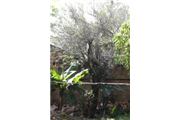
Elephant tree is a small evergreen tree with an open, spreading crown; it can grow 4 - 12 metres tall. The bole, which can be unbranched for 2 - 3 metres, is up to 50cm in diameter.
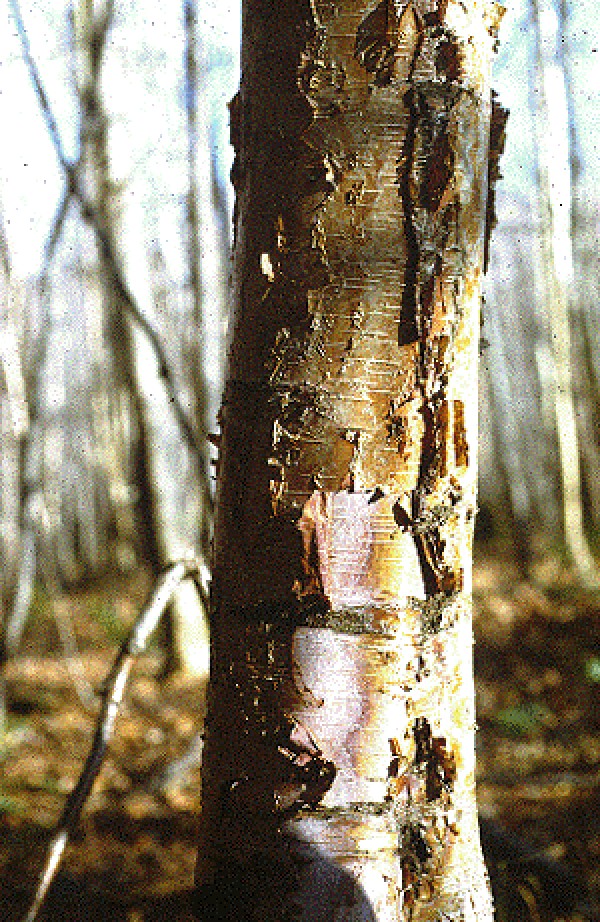
BARK: smooth, pale yellow-brown, peeling off in large papery pieces. A cut looks red-brown and a fragrant milky resin drips out.
LEAVES: large and compound on a stalk to 45 cm, 6–8 pairs of leaflets plus one at the tip, each oval, 4–8 cm, densely hairy below, the edge sharp or round-toothed, sometimes double toothed.
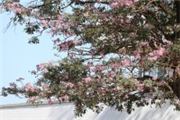
FLOWERS: sweet smell; develop on loose heads at the ends of thick branch-lets, appearing before the new leaves. The red flower stalk, to 35 cm, bears the white-pink flowers with 5 petals and 10 yellow stamens.
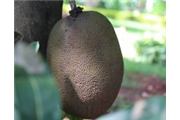
FRUITS: red capsules about 2 cm long, 3-sided with 3 hard seeds inside.
Uses
A fragrant resin is obtained from the stems. It is used as incense in churches.
The wood and its branches are used mainly for fencing, making agricultural implements, household furniture, matchboxes, splints, particleboard, pencils, plywood, picture frames and veneer.
Medicine: roots, leaves, resin, bark. http://www.fao.org/docrep/article/wfc/xii/0845-a1.htm
Agroforestry: provides bee forage and fodder to the animals, rovides plant cover and produces litter and hence protects the soil from erosion.
Provides shade.
Ecology
Elephant tree is native to Uganda. It is found on stony hillsides, often dominant and forming pure stands, sandy valleys, dry, rocky or more or less shallow soils, on granite, dry Acacia, and at elevations from 400 - 1,830 metres.
Management
The tree needs to rest from 2-5 years before the second harvest of resin-gum. Over exploitation could damage the trees.
Tree gallery
.jpg)
.jpg)