Chrysophyllum albidum
White star apple, Star apple
Kwamba: Bondongulo Luganda: Mululu, nkalate Luganda, dialect Buddu: Nkalate Lugwe: Muhuhubu Lusoga: Mululu Runyoro: Mululu Rutoro: Muhambulya.
Description
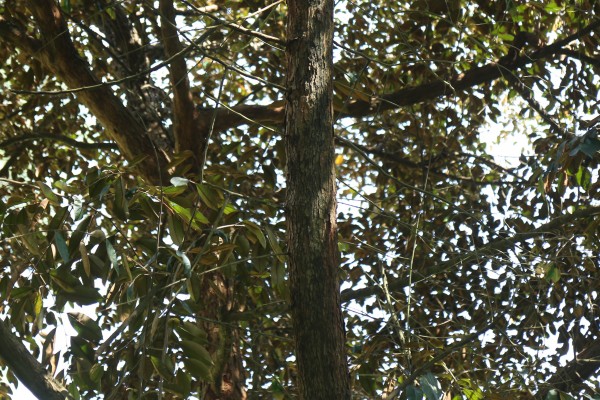
A tall straight tree from 30 m, to 60 m with a fluted trunk and small buttresses to a dense crown, white latex in all parts.
BARK: thin, pale grey-brown, with a network of zigzag fissures; twigs grooved; white gummy latex when cut.
LEAVES: the name albidum (white) refers to the white or silvery-grey undersurface of mature leaves, easily seen when looking up into the tree's canopy. The lower surface of young leaves has soft golden-brown hairs. Leaves oval-oblong, 12-25 cm, tip usually pointed, midrib sunken above, prominent below with clear side veins, leaf stalk to 3 cm.
FLOWERS: cream-yellow, very small in dense stalked clusters, usually in leaf axils.
FRUIT: yellow-orange-brown when ripe, rounded, 3-7 cm across with a sharp tip, depressed the other end to a short stalk. Inside shiny brown seeds to 2.5 cm long lie in sweet-acid edible pulp each bean-like with one sharp edge. In cross-section seeds arranged like a star (as in an apple). Five-ribbed when dry.
Uses
Edible: fruit can be eaten fresh or made into a soft drink, and can be fermented and distilled for the production of wine and spirits.
Medicine: bark . http://tropical.theferns.info/viewtropical.php id=Chrysophyllum+albidum
The juice of the leaves is used instead of lime juice for coagulating flake rubber.
The wood is suitable for construction work, tool handles and similar purposes.
An ornamental tree.
Ecology
White star apple is indigenous to Uganda. A dominant canopy tree of lowland mixed rain forest, sometimes riverine. It is widely distributed from West Africa to the Sudan with an eastern limit in Kakamega Forest, Kenya. It is widely distributed in Uganda, e.g. in Budongo, Mabira and other forests.
Management
Requires good tending and shade until well established.
Tree gallery
.jpg)
.jpg)
.jpg)
.jpg)