Eriobotrya japonica
Loquat
Description
A dense evergreen shrub or small tree to 7 m, branching close to the ground.
BARK: grey and rough, young stems hairy.
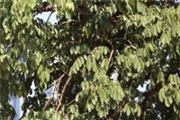
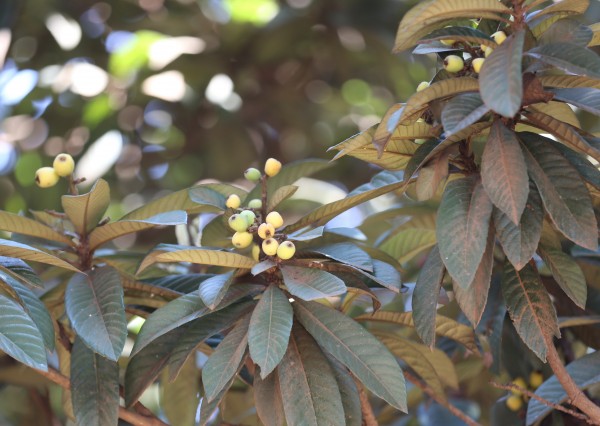
LEAVES: stalkless, dark green, shiny above, woolly hairs below, about 35 cm long, the tip pointed and the edge prickly, toothed, young leaves paler, foliage in upward pointing tufts.
FLOWERS: cream-white, scented, in pyramidal heads at the end of branches, each flower 2 cm across, flower buds covered with golden-brown hairs.
FRUIT: in loose clusters, yellow, egg shaped, usually 2-7 cm long, acid-sweet flesh around a few large brown-black seeds.
Uses
Edible: fruit can be eaten out of hand or cooked in pies, sauces, jellies etc., seed is used as an almond-like flavoring in drinks and cakes, the roasted seed is a coffee substitute. http://tropical.theferns.info/viewtropical.php id=Eriobotrya+japonica
Medicine: leaves or young shoots, flowers, fruit. http://tropical.theferns.info/viewtropical.php id=Eriobotrya+japonica
The flowers have insect repellent properties.
Flowers can be used in perfume production.
The wood is suitable for poles and posts, carving and drawing materials such as rulers, and is in demand for making stringed musical instrument.
The wood is used for fuel.
Agroforestry: useful for shade and as a windbreak, large leaves are suitable for mulch, can be used for bee forage.
Ecology
A small evergreen tree very widely planted in its native China, Japan and northern India, and also in the Mediterranean. Mainly planted in cities and towns, 1,500-2,400 m. It requires moderate to heavy rainfall but is drought resistant once established. Trees growing in the highlands of Fort Portal, Kabale, Kisoro, Rukungiri and Mbale Districts produce good large fruit, but at lower altitudes around Kampala the fruits are very small. In Kampala, Loquat can be found within Makerere University, along Jinja road, Makerere II zone C among other places.
Management
Fast growing; pruning.
Tree gallery
.JPG)
.JPG)
.JPG)
.JPG)