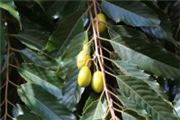
Eucalyptus camaldulensis
Murray red gum, Long beak eucalyptus, Red gum, River gum, River red gum, Red river gum
Luganda: Kalitunsi.
Description
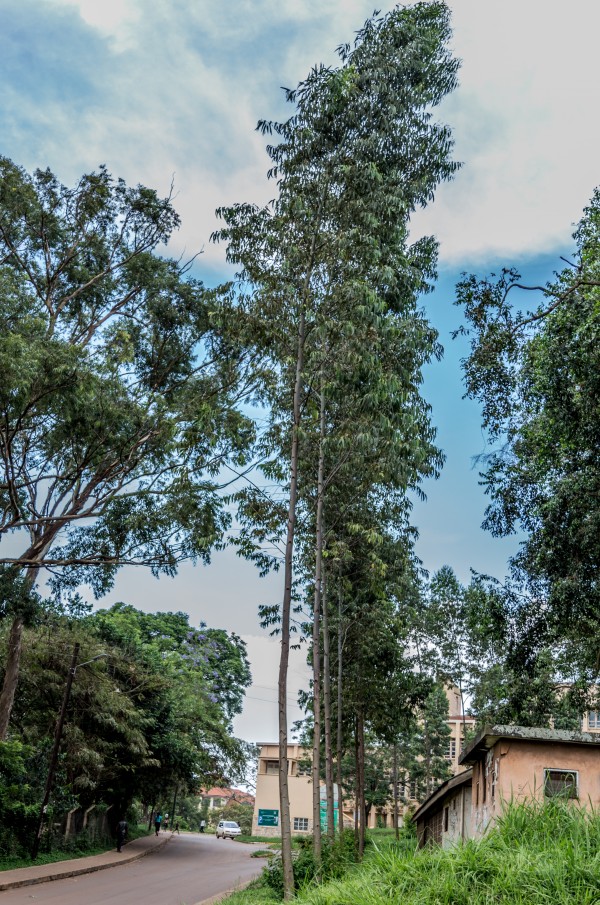
A tall evergreen tree to 30 m, deeply branched but also with a long straight bole.
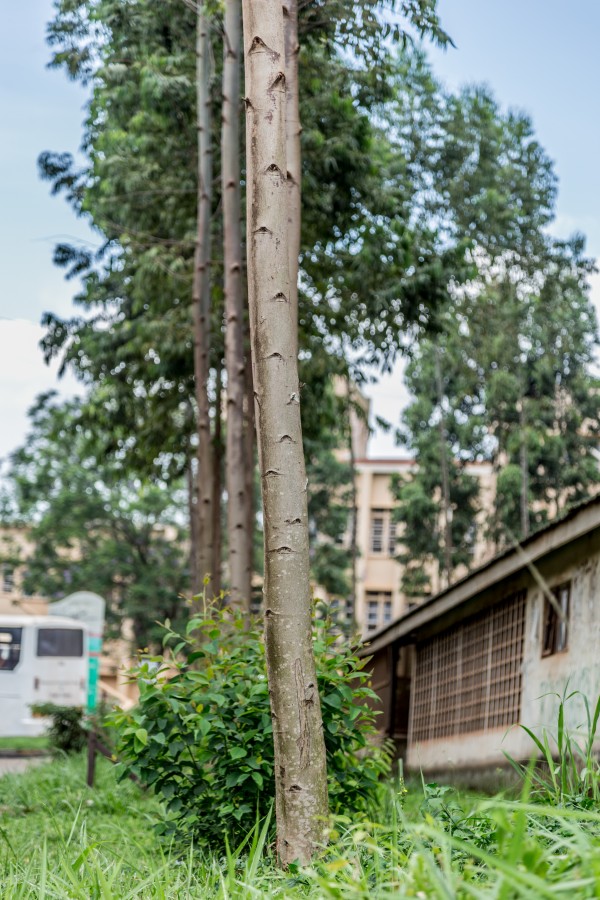
BARK: white to brown, thin and peeling in long strips; when cut it exudes red gum.
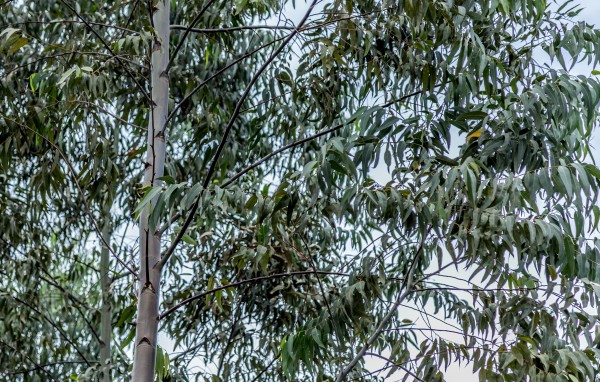
LEAVES: grey-blue, long and drooping, to 30 cm.
FLOWERS: white clusters, short conical bud caps
FRUIT: very small rounded capsules on thin stalks, each less than 1 cm, 4 valves.
Uses
Medicine: an essential oil in the leaves, oleo-resin, leaves. http://tropical.theferns.info/viewtropical.php id=Eucalyptus+camaldulensis
Agroforestry: planted for shade and shelter, ca be planted to protect crops from blowing sand, can be used in Intercropping, can be planted in soil stabilization schemes, helps in draining the land thereby destroying a potential breeding site for mosquitoes, used in erosion control, used in apiculture, planted as a wind break.
A gum is obtained from the trunk. It is used medicinally, as a dye and in tanning.
The leaves and bark contain tannins.
The smoke from burning leaves helps to repel insects.
The peeled twigs are used as chewing sticks in order to clean the teeth and maintain oral hygiene.
The wood is used for strong durable construction, interior finish, flooring, cabinetry, furniture, fence posts, cross-ties, sometimes pulpwood.
The firewood is suitable for industrial use in brick kilns but is not preferred for domestic use because it is too smoky and burns too fast. However, it makes good-quality charcoal.
The bole has some potential for shiitake mushroom (Lentinus edodes) cultivation.
The bole yields a gum that can be used as a dye.
An ornamental tree.
Ecology
Widely distributed in its native Australia and one of the first Eucalyptus spp. to be used elsewhere, both in the Mediterranean and the tropics. Does well in semi-arid regions and tolerates a long dry season. It does well in deep silt or clay soil in eastern and northern Uganda and in dry parts of Southern Region, 900-1,800 m, and tolerates some salinity. In Kampala, this tree can be found within Kitante courts, Golf course club, Makerere University among other places.
Management
Fast growing; coppicing, pollarding.
Tree gallery