Ficus sur (F. capensis)
Bush Fig, Broom-cluster fig, Cape fig
Ateso: Edulo, edurokoi Ateso K: Ekonotorum Luganda: Kabalira Lugbara: Idio Luo L: Ebuu Lusoga: Mukunyu Madi: Elo Rukiga: Musomoro.
Description
A large deciduous tree to 20 m and up to 150 cm in diameter, occasionally buttressed.
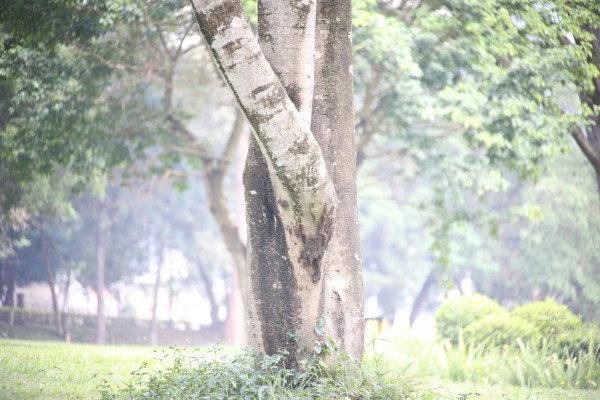
BARK : smooth, grey, darker grey-brown with age.
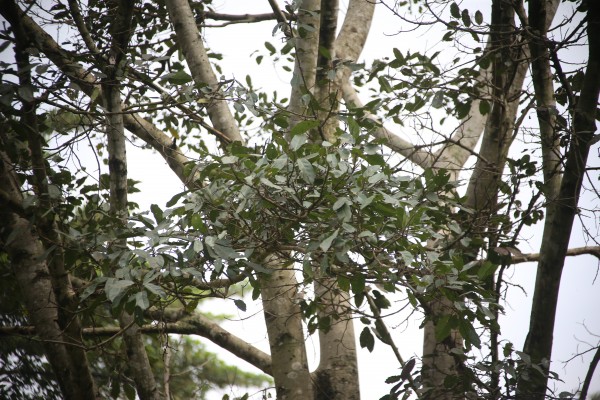
LEAVES : large, broadly oval, to 13 x 20 cm, usually smooth, edge often widely toothed, sometimes wavy, veins clear below, stalk grooved and flexible to 6 cm.
FLOWERS: Inflorescence a fig, the flowers enclosed within.
FRUIT: figs in heavy clusters on branches to 70 cm long from trunk or older wood, round, 2-4 cm across, on stalks, orange-red, often hairy, soft and edible but watery and tasteless, having many seeds and often insects too.
Uses
Edible: fruit (ripe figs) can be eaten raw or cooked and are sometimes made into jams, puddings and preserves, young leaves and shoots are occasionally cooked and eaten as a vegetable, young aerial roots are said to be edible, the bark is chewed with kola nuts and this helps to relieve thirst. http://tropical.theferns.info/viewtropical.php id=Ficus+sur
Medicine: bark, leaves and roots, latex, sap squeezed from leaves, sap of young shoots, figs, seeds. h http://tropical.theferns.info/viewtropical.php id=Ficus+sur
Agroforestry: the tree is used in hedges, grown as a shade tree for coffee, does not compete with agricultural crops.
Latex obtained from the plant is used to make balls.
The rough-textured leaves are used as sandpaper.
The inner bark is used to make rope and cloth.
The bark contains tannins and yields a brown dye.
Small pieces of wood are used as fire sticks to ignite fire by friction.
The wood is used for construction, furniture, mortars for grinding flour, kitchen utensils, pots, boxes, beer troughs, drums and beehives. It is also suitable for sporting goods, agricultural implements, hard board and particle board. Wood from the branches is made into knife-handles.
The wood is also used as fuel wood. Small pieces of wood are used as fire sticks to ignite fire by friction.
The tree is used as an ornamental and shade tree.
Ecology
Cape fig is indigenous to Uganda. This species occurs from sea-level up to 2500 m altitude, on riverbanks and in riverine forest, but also in upland forest, woodland and wooded grassland. A widespread African fig tree occurring in East Africa and extending to Yemen, Angola and South Africa. In Uganda it occurs in lowland and intermediate forests, being most common in Moyo, Kitgum, Gulu and Lira Districts and in Central and Western Regions, often left in cleared land. In Kampala,Bush Fig can be found within Makerere university, Uganda Golf course club, Children's park Kamwokya, at Archer road, Acacia avenue among other places.
Management
Coppicing, lopping and pollarding are possible.
Tree gallery
.jpg)