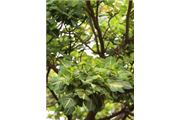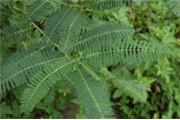
Sesbania sesban (S. aegyptiaca)
River bean, sesbania
Luganda: Muzimbandeya, mubimba Rukiga: Munyuganyege.
Description
A deciduous, short-lived shrub or tree to 8 m.
BARK: red-brown, young shoots hairy.
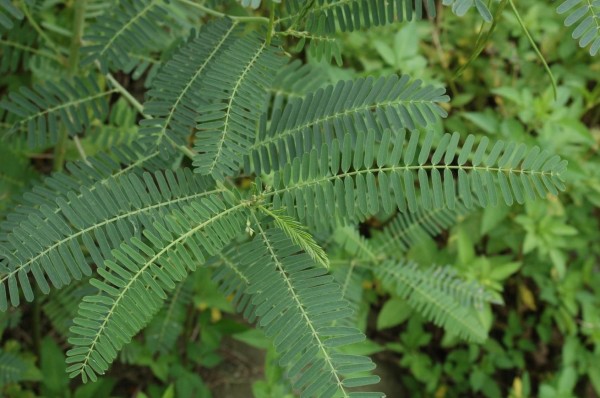
LEAVES: compound to 12 cm long, 10-25 pairs leaflets, each leaflet to 2 cm oblong, tip notched, narrow.
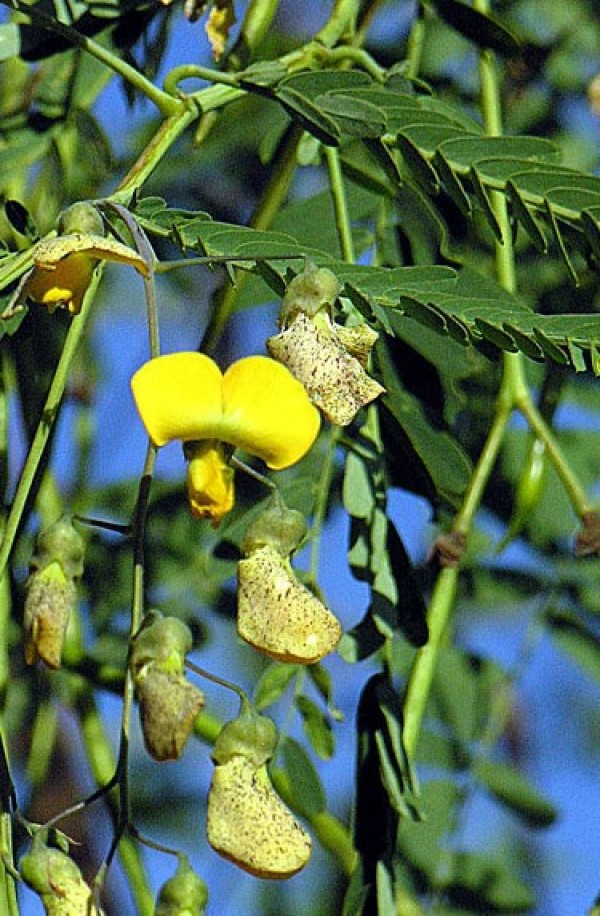
FLOWERS: pale yellow, speckled maroon, in few-flowered sprays to 15 cm long.
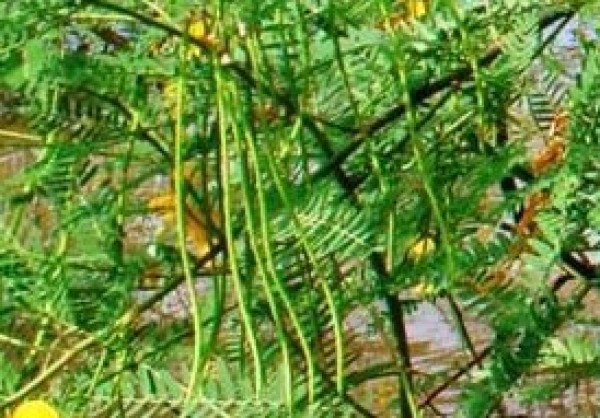
FRUIT: abundant bunches of thin pale brown pods to 20 cm, with separated sections so seeds rattle within.
Uses
Medicine: roots, leaves, oil obtained from the seeds, seeds. http://tropical.theferns.info/viewtropical.php id=Sesbania+sesban
Agroforestry: can be used as a live support for black pepper, grapes, cucurbits and betel vine, leaves provide fodder to the animals, used to shade plantations of coffee, tea and cocoa, acts a windbreak, increases soil nitrogen levels through symbiotic interaction with bacteria, it has the ability to stabilize soil, branches have been used as mulch and leaves as a green manure, improves soil fertility.
Fibers obtained from the bark are used for making ropes and nets.
It has the potential for pulpwood production.
The seeds and bark produce a gum.
The wood is used traditionally for making arrows, pipes, toys etc.
Provides firewood and charcoal.
Provides poles.
Ecology
Sesbania sesban is native to Uganda, Chad, Egypt, and Kenya. It's one of the many useful African Sesbania spp. which survive waterlogging and fix nitrogen. It is found at the margin of fresh-water lakes and seasonal ponds. Some types tolerate acid and saline soils. Easy to establish even in waterlogged soil and dry eroded soil. It is an important agroforestry shrub. In Kampala, sesbania can be found along Buganda road, Impala avenue, Mawanda road among other places.
Management
Very fast growing. Pruning, short rotation; coppice when young.
Tree gallery