Vernonia amygdalina
Bitter leaf
Luganda: Mululuza Lugbara: Omululisi Lugishu: Muuluza, chichilusa, luluza Luo A: Labori Luo L: Okelo-okelo Madi: Kayakaya Runyankore: Mubirizi Runyarwanda: Mubirizi Runyoro: Kibirizi.
Description
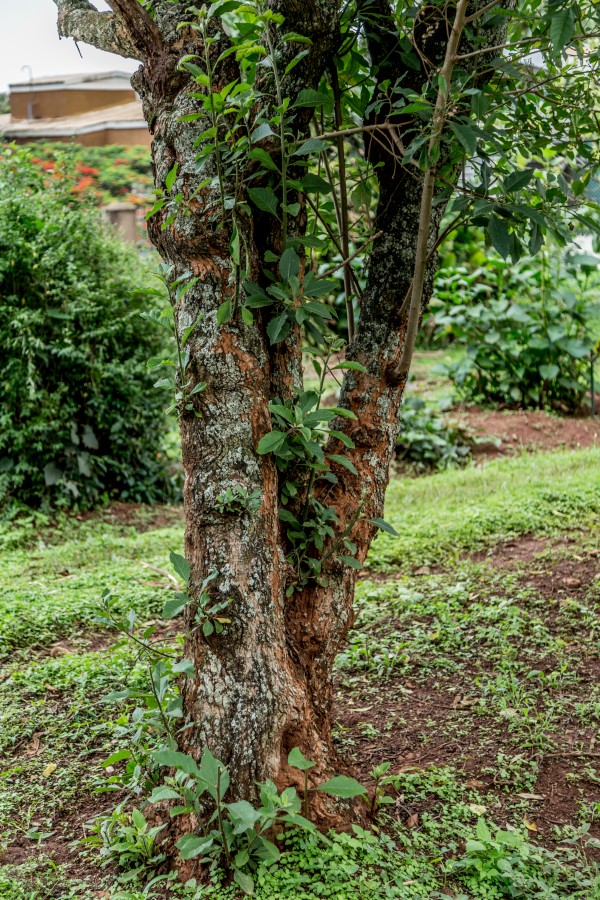
A single-stemmed shrub to 3 m, sometimes a tree to 10 m with a wide bole.
BARK: pale grey, rather rough, flaking later, branches brittle.
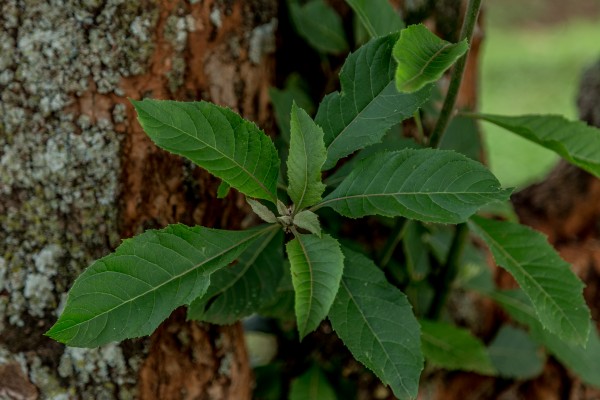
LEAVES: ovate, up to 20 x 5 cm, usually 10 cm long, tapering at both ends, dark green above, soft pale hairs below, edge may be widely toothed.
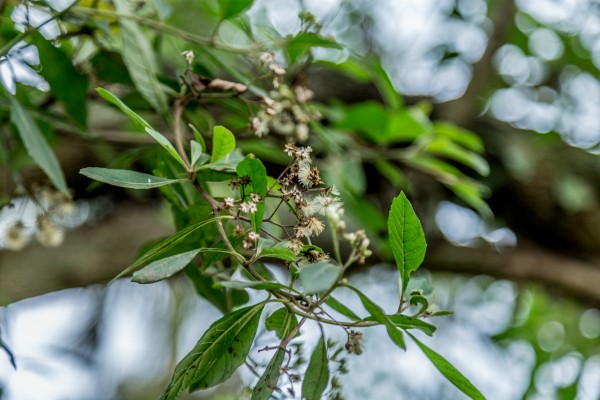
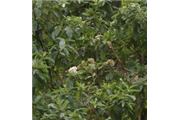
FLOWERS: white-green, each only 6 mm across, in dense branching flattened heads to 30 cm across, sweet scented in the evening.
FRUIT: tiny seeds with stiff white hairs.
Uses
Edible: leaves can be eaten as raw vegetables, chew-sticks from the roots and twigs are regarded as an appetizer.
Agroforestry: used in soil conservation, termite-resistant branches are useful as stakes for lining out plantations and as a live fence, provides fodder, provides bee forage (leaves) to the animals, can be planted as a boundary planting.
Wood is a source of fuel and a charcoal.
Provides timber.
An ornamental.
Medicine: roots, bark, and leaves. http://www.worldagroforestry.org/treedb/AFTPDFS/Vernonia_amygdalina.PDF
Ecology
A woody shrub of both East and West Africa growing in sub-humid wooded savannah or wetter highlands. In Uganda it grows in secondary scrub, forest edges, thickets and invades cultivated areas. In Kampala, Bitter leaf can be found within Uganda Golf course club, Kitante courts, Makerere II zone C, National housing & Medical quarters among other places.
Management
Fast growing tree. Coppicing should be done.
Tree gallery
.jpg)