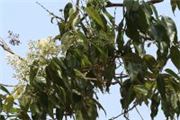
Warbugia ugandensis
East African green wood, Kenya greenheart, Pepper-barktree, East African greenheart,
Luganda:Mukuzanume Luganda, dialect Buddu:Muwiya Lusoga: Balwegira Runyankore: Mwiha Runyoro: Musizambuzi Rutoro:Muharami
Description
An evergreen tree to 25 m with a dense leafy canopy.
BARK: rough brown-black, cracked into rectangular scales.
LEAVES: shiny dark green above, midrib very clear below, edge wavy, to 10 cm long.
FLOWERS: inconspicuous green-cream.
FRUIT: round to egg-shaped, to 5 cm long on short stalks, green to purple with a waxy, white surface. Several flat heart-shaped seeds inside a pulp.
Uses
Edible: fruit is eaten, leaves and seeds are sometimes used to add flavour to curries. http://tropical.theferns.info/viewtropical.php id=Warburgia+ugandensis
Medicine: the bark, fresh roots, and leaves. http://tropical.theferns.info/viewtropical.php id=Warburgia+ugandensis
The wood makes good timber for building and making furniture.
The wood is used for fuel and to make charcoal.
Agroforestry: fallen leaves provide green manure and mulch, leaves, pods and seeds are fed to animals, crown provides shade.
An ornamental tree.
The heartwood contains sesquiterpenoids that can be used against army worms, which are widely occurring African crop pests.
A resin obtained from the stem is used as a glue.
Ecology
East African green wood is indigenous to Uganda. A widely distributed tree in lower rain forest and drier highland forest areas of East Africa, 1-2,000 m. In Uganda, it grows in colonizing forest, forest edges and thickets, often on dry sites. It is widely distributed and abundant in Maramagambo Forest. In Kampala, this tree species can be found within Uganda Golf course club, Makerere university, along Lugogo bypass among other places.
Management
Fairly slow growing; coppicing.
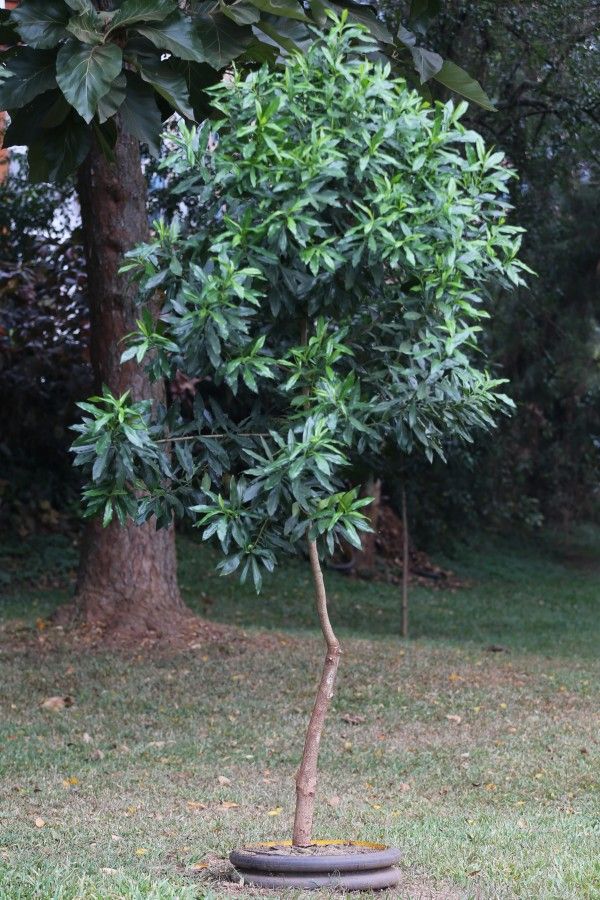
Tree gallery
.jpg)