Celtis wightii
(Bondoukou) tonko
Description
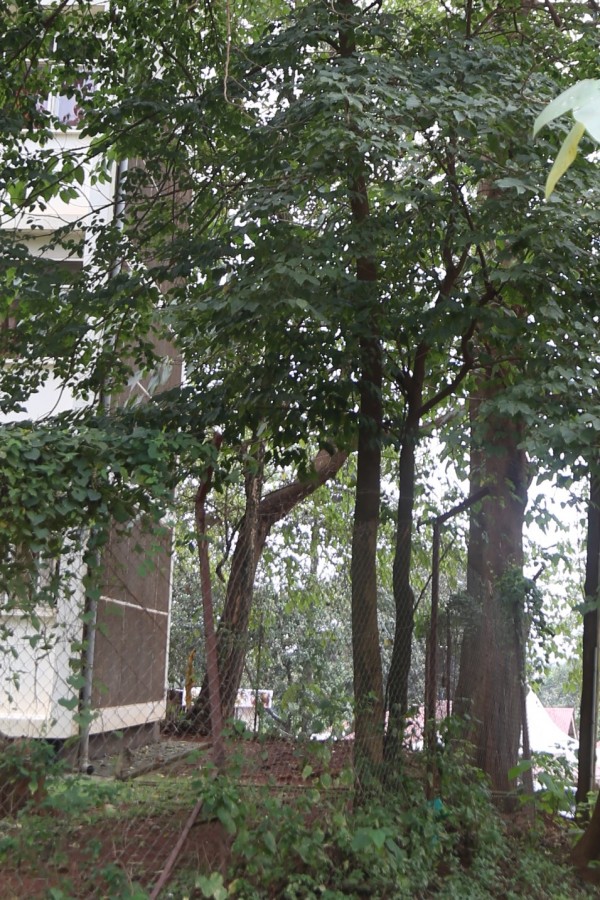
Much branched evergreen monoecious tree or shrub, 3–20 m. tall and 80 cm of diameter, often with short sharp buttresses. The bole is usually straight and cylindrical.
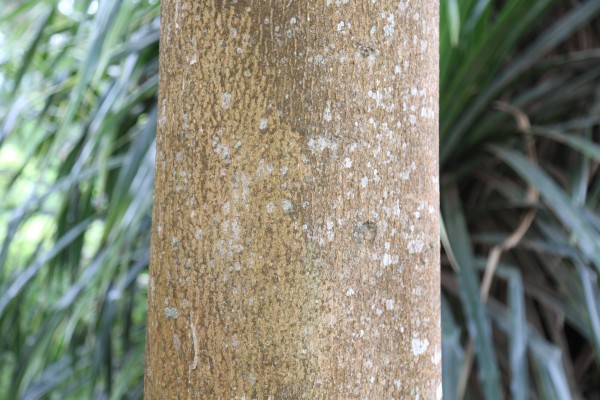
BARK: smooth, grey. Young twigs puberulous or subglabrous.
LEAVES: Young foliage pink. Leaves simple, alternate; stipules lateral, elliptic-ovate; petiole 4-15 mm, slender, pubescent; lamina 6-12 x 2-6 cm, ovate, elliptic or elliptic-oblong, base round or acute, apex acuminate, margin entire, glabrous, coriaceous; 3-nerved from the base, prominent, intercostae scalariform, prominent.
FLOWERS: polygamous, yellow, in axillary puberulous cymes, usually on new shoots; male flowers usually at the basal part and female flowers on the upper side; tepals 5, 2 x 1 mm, ovate, concave, ciliate, membranous; stamens 5, free, inserted round a woolly torus; ovary superior, sessile, ovoid, 1 mm, 1-celled; style 8 mm long, pubescent.
FRUITS: 3–7 mm. long pedicels, ovoid, shortly beaked, up to 12 mm. long, 10 mm. across, red, glabrous.
Uses
Edible: oil obtained from the seed is edible.
Medicine: roots are used as a remedy for diarrhoea.
The oil from the seed can be used for making lubricants and soap.
The bark provides a useful fiber used for making ropes and paper.
The wood is used for making poles, tool handles, beams, joists, rafters, cheap furniture, box lumber, etc.
The wood is used for fuel.
An ornamental and a shade tree.
Ecology
Celtis wightii is native to Uganda and widely distributed in Tropical Africa. It is widespread and common throughout New Guinea and Solomon Islands, and reported from Bismarck Archipelago and Moluccas.It is an understorey or main storey tree in primary and secondary forests, growing from the sea level up to 700 m of altitude. In Kampala, this tree is found within Uganda Golf course club among other places.
Tree gallery
.jpg)
.jpg)