Hyophorbe lagenicaulis
Bottle palm, Champagne bottle palm, Palmiste Gargoulette, Pig nut palm, Bottle coco, Short Bottle palm
Description
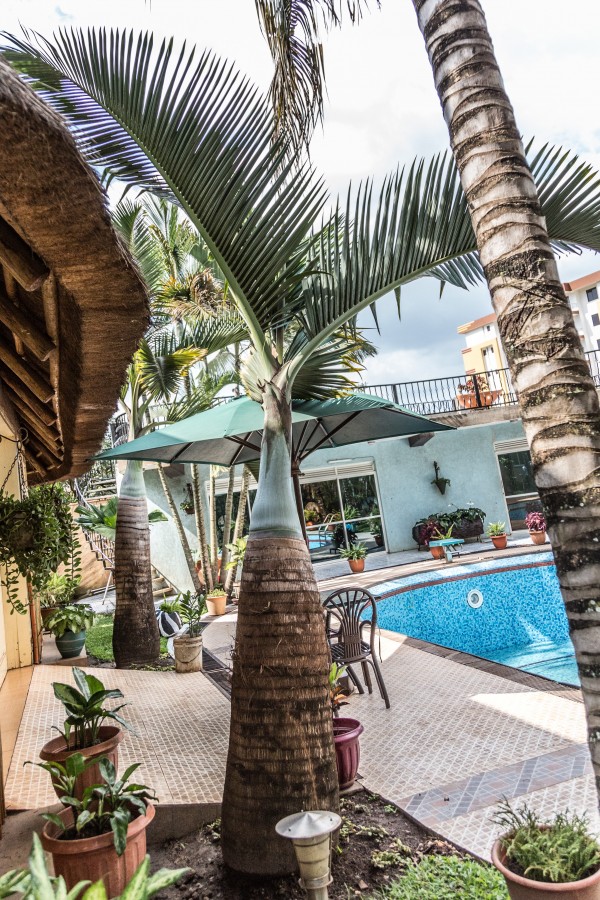
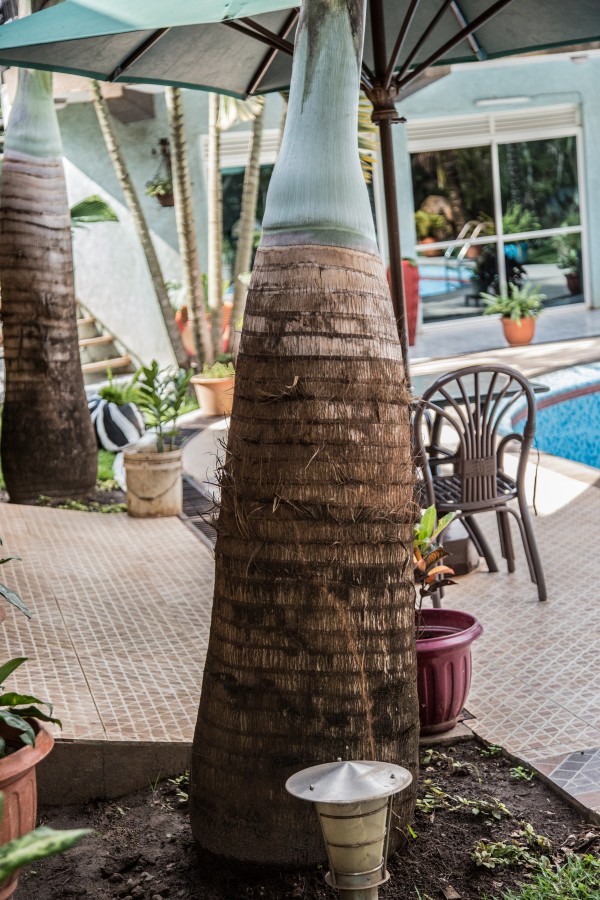
A medium sized palm, intriguing, solitary, dainty, with a large swollen trunk base, which tapers upwards to the attractive crownshaft, resembling a bottle, topped with a sparse, delightful crown of ascending to spreading, bright green, feathery fronds.
BARK: grey, ringed with visible old leaf scars, up to 60 to 70 cm in diameter, with a bulge at the base, crownshaft smooth, green.
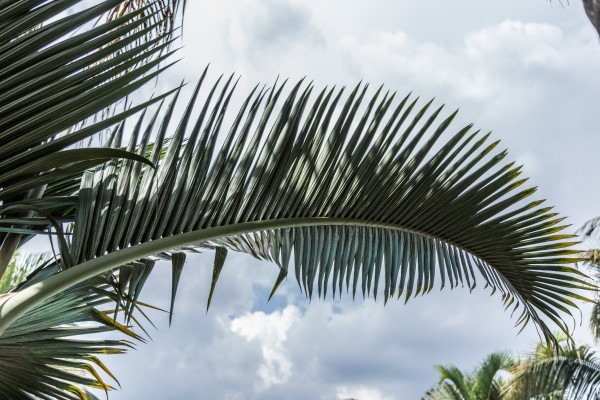
LEAVES: pinnate (feather-shaped), mildly recurving, ascending to spreading, upwardly arching, 4 to 6; leaflets stiff, narrow, up to 140, each about 0.6 m long.
FLOWERS: Inflorescences branched, cream, horn-like, about 75 cm long, arising from below the crownshaft.
FRUIT: oblong, ripening from green to orange to black, about 3 cm long.
Uses
An ornamental palm.
Ecology
Native to Round Island, off the coast Mauritius. This species grows in the lowland savannah on fertile volcanic soils among exposed rock. It is endangered in habitat and almost went extinct with fewer than 10 mature trees remaining in the wild because of the lack of regeneration due to the impact of introduced goats and rabbit. However, it is very well established in cultivation for its unique beauty throughout the tropics and subtropics as a specimen plant. It prefers sunny sites and an abundant supply of water in summer. It is resistant to saline winds and to drought.
Management
Slow-growing palm. Pruning.
Tree gallery