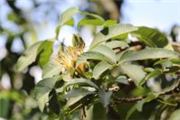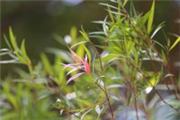
Melaleuca huegelii
Chenille Honey-myrtle
Description
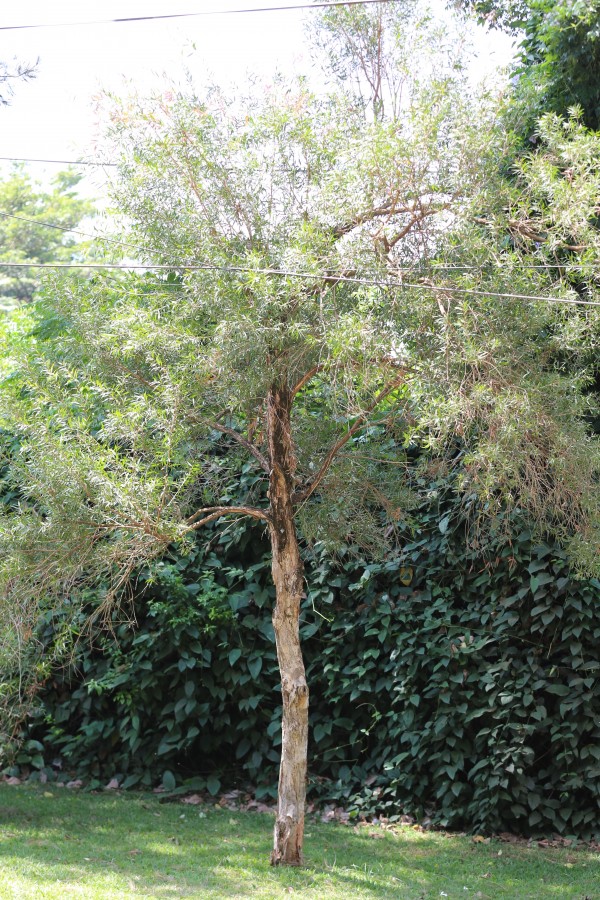
Medium, dense shrub or tree to 5 m high with branches to the ground.
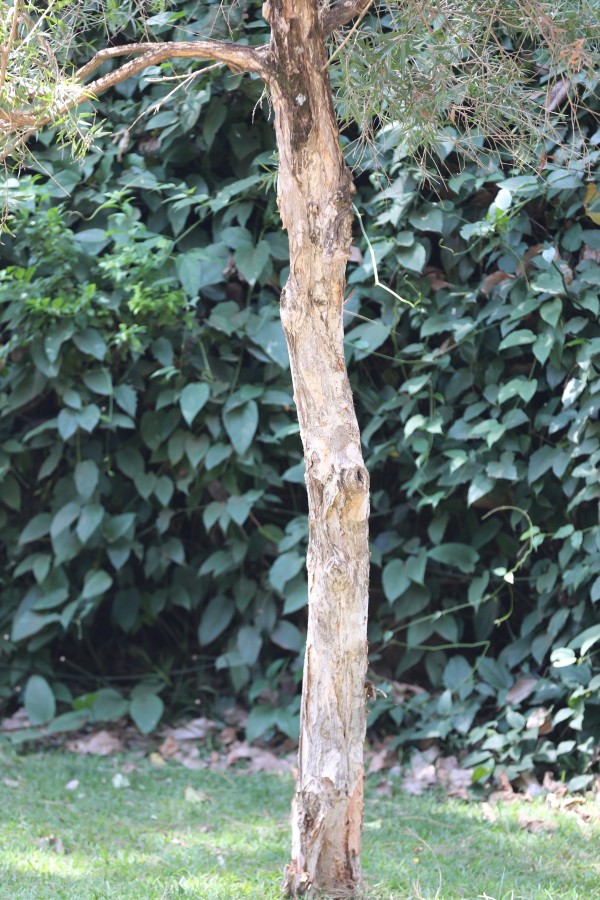
BARK:
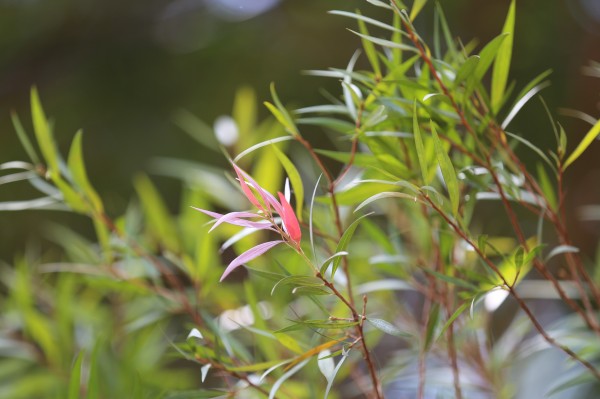
LEAVES: small, almost triangular in shape and aromatic, lance-shaped, 4–5 mm long, 2–3 mm wide with a pointed tip and in a dense arrangement along the stem, often overlapping towards the growing point.
FLOWERS: white, cream, comprising clusters of stamens, 6–8 mm long in dense terminal spikes often covering the branchlets, white, pinkish-purple in the bud stage often with the vegetative growing point exceeding the flower spike.
FRUITS: flattened circular capsules, 3 mm wide, 3 mm tall, in clusters of up to 50 at intervals along the stem with each cluster indicating a flowering cohort. Capsules open in response to fire or senescence of the stem.
Uses
An ornamental tree.
Agroforestry: can be planted as a wind-break, shelter or barrier.
Fibre and bark can be used for clothing and swaddling babies.
Edible: drinks can be made from the nectar.http://plantselector.botanicgardens.sa.gov.au/Plants/Details/8
Wood and stems for implements and to construct shelters.
Ecology
Chenille Honey-myrtle is native to Western Australia. It is found in coastal areas on limestone cliffs, dunes and plains. In Kampala, this tree can be found within Makerere university, along Elgon terrace, Lower Kololo terrace among other places.
Management
Requires pruning
Tree gallery