Murraya exotica
Orange Jasmine, Chines Box
Description
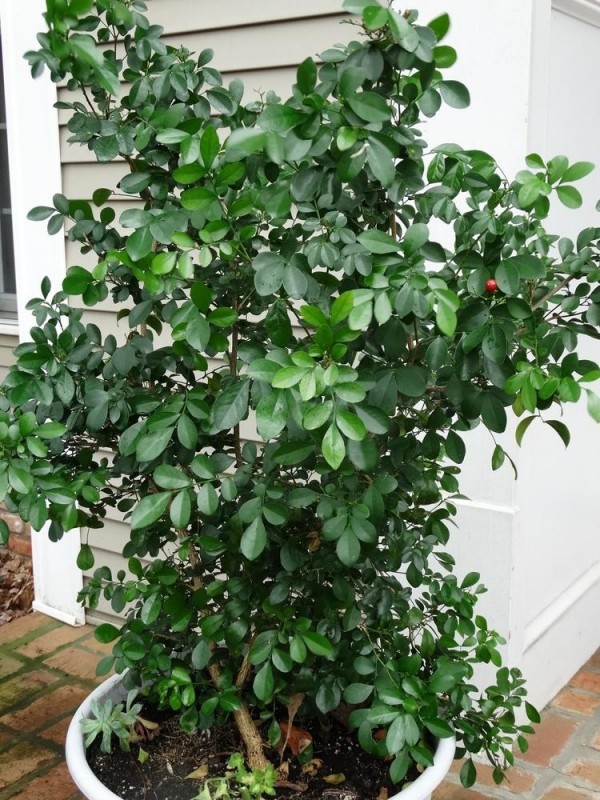
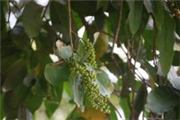
Orange jasmine is an evergreen shrub or small tree with a fine-textured, compact crown. It grows from 1.8 - 12 metres tall with a clear bole that can be 2.5 metres long and 60cm in diamete.
BARK: Multi-stemmed, but can be trained to also grow with a short, single stem.
LEAVES: Paired leaves, glossy, aromatic foliage, alternate, pinnate and about 2 - 3 cm long.
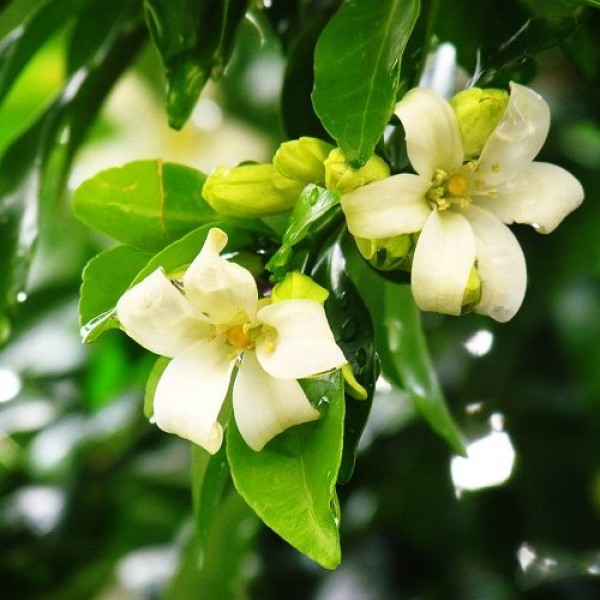
FLOWERS: Small, white bell shaped flowers. Fragrant blooms are borne in clusters, containing up to eight flowers, at the tips of branches.
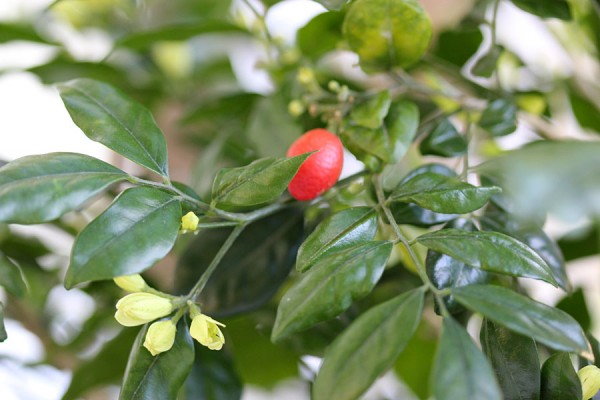
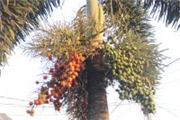
FRUIT: plum-sized red berries, oval, fleshy.
Uses
An ornamental plant.
Medicine: leaves, flowers, fruits and barks. https://florafaunaweb.nparks.gov.sg/Special-Pages/plant-detail.aspx id=2239
Edible: flowers are used for scenting tea, leaves are used to flavour curries, fruit.
Agroforestry: grown as a living fence to protect vegetable gardens, can be used as a small hedge.
An essential oil is obtained from the flowers. It is used in perfumery and in the production of cosmetics.
The wood and the roots are ground into a sweet-scented powder, known as 'Thanaka Powder', that is used as a cosmetic on the cheeks of women.
The wood, even from smaller trees, is used locally to make tool handles, walking sticks, furniture or used for turning.
Ecology
Native to India. Murraya exotica is attractive to bees, butterflies and birds. It is found in thickets, montane forests; at elevations from near sea level to 1,300 metres. In Kampala, this tree can be found in Upper Mawanda village among other placess.
Management
Slow growing. Pruning, trimming.
Tree gallery