Trema orientalis (T. guineensis)
Charcoal tree, Trema, Pigeon wood,
Ateso: Erere Kwamba: Bukingi Luganda: Kasisa Lugwe: Lusubasubi Lunyuli: Mugiryanjole Luo A: Opobo-bunga Luo J: Yakiyaki Lusoga: Nkulidho Rukiga: Mubengabakwe, mugwampira Rukonjo: Muhera Rutoro: Mutete, kasisa, mwitha.
Description
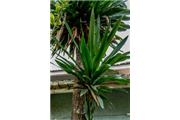
A shrub or tree with a heavy branching and rounded to spreading crown, reaching a height of up to 18 meters. It has a short basally swollen bole that can be 60cm in diameter.
BARK: light grey, branchlets hairy, smooth but marked with parallel longitudinal lines and corky spots, slash creamy-white to light yellow, fibrous, bright green immediately beneath the bark.
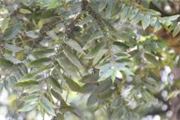
LEAVES: alternate along drooping branchlets, to 14 cm long, rough and dull above, hairy below, the edge finely toothed all round, the blade unequal sided.
FLOWERS : small, yellow-green, separate male and female flowers.
FRUIT: small, round and fleshy, black when ripe, 4-6 mm, containing one black seed in green flesh.
Uses
Medicine: bark, leaves, and tea made from small pieces of the roasted wood. http://tropical.theferns.info/viewtropical.php id=Trema+orientalis , http://www.worldagroforestry.org/treedb/AFTPDFS/Trema_orientalis.PDF
Agroforestry: planted as a shade tree in coffee and cocoa plantations and also in other crops, widely planted for soil reclamation, helps in soil conservation, provides mulch.
A fiber obtained from the bark is used for making cords and ropes.
The seed contains a dark green fixed oil.
The bark yields a black and brown dye and a coffee-colored dye is obtained from the leaves.
The inner bark can be rubbed on ropes to blacken and preserve them.
The wood is used for manufacturing panel products, poles and drumsticks.
The wood is used for paper and pulp production.
The tree can provide plenty of firewood and excellent charcoal which is even suitable for making gunpowder and fireworks.
An ornamental tree.
Ecology
Charcoal tree is native to Uganda. A small, short-lived tree, widely distributed in Asia and Africa from Senegal and the Sudan to the Cape in higher-rainfall areas, up to 2,000 m. It is found throughout Uganda in riverine forest or forest margins as a pioneer which quickly invades clearings and disturbed soils. In Kampala, this tree species can be found within Uganda Golf course club, Kitante courts, Makerere university among other places.
Management
Very fast growing; coppicing.
Tree gallery
.jpg)
.jpg)
.jpg)
.jpg)