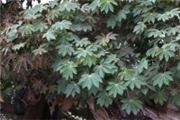
Podocarpus latifolius (P. milanjianus)
Podo, East African yellow-wood
Kwamba: Kiringi Luganda: Musenene Lugishu: Musagali, gumuhalamwa Luo: Akikache Rukiga: Omuhulire Rukonjo: Obwipe Sebei: Sitetet
Description
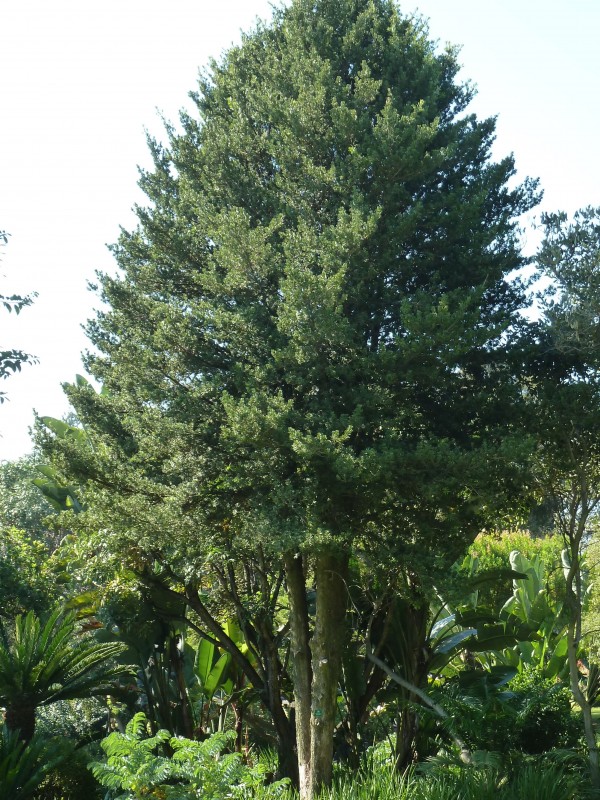
A forest tree to 35 m, evergreen, conical in shape when young, the trunk large and buttressed in old trees. The bole, which is usually straight and cylindrical, is up to 150cm in diameter, occasionally reaching 300cm. It can be branchless for up to 10 meters, occasionally for 20 meters.
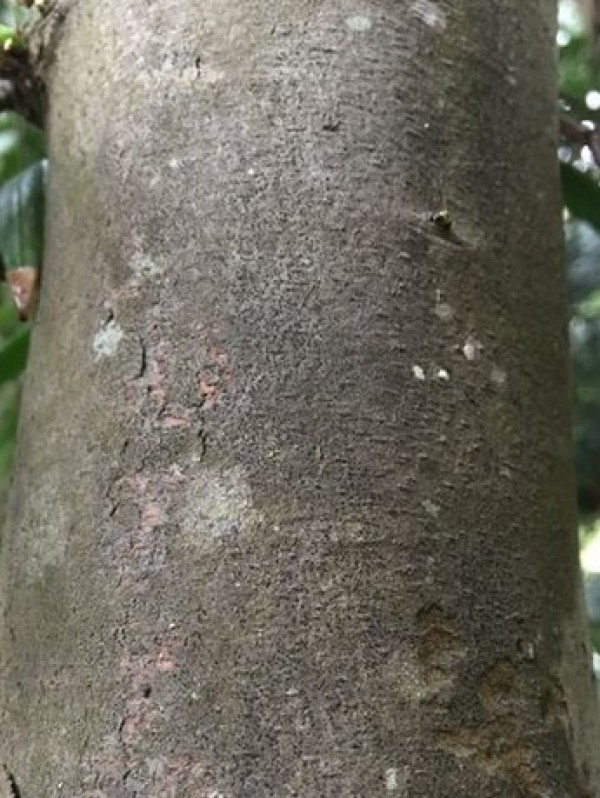
BARK: red-brown to grey-brown, narrowly fissured, peeling in long fibrous strips.
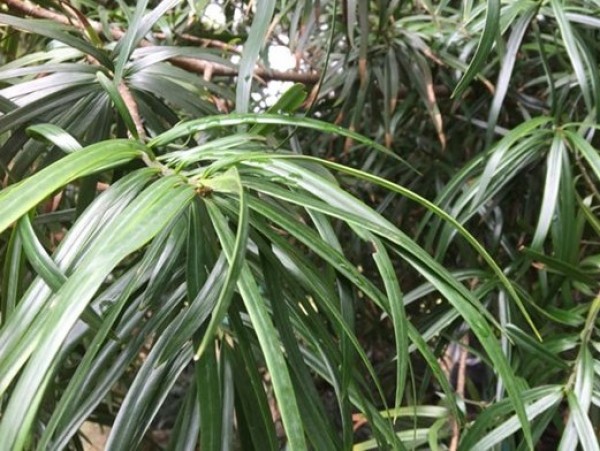
LEAVES: spirally arranged at the tips of branches, very shiny, curved, tough, to 15 cm, with a pointed tip, larger and fresh green colour when young.
FLOWERS: inconspicuous and not showy.
FRUIT/CONES: male trees have small pinkish catkins with pollen, to 5 cm; female trees produce soft fleshy "fruit" about 1 cm, ovoid, the thin leathery skin green-purple with a grey bloom. The receptacle stalk below the fruit is characteristically swollen, soft and red, 1-2 cm, soon falling (podocarpus means "fruit with a stalk or foot"). The inner shell is thin and woody containing 1-2 woody seeds smaller than those of P. falcatus.
Uses
An ornamental tree .
The wood is highly valued for furniture and ship building, panelling, boxes, veneer and plywood. It is also suitable for construction, flooring, joinery, interior trim, vehicle bodies, railway sleepers, toys, novelties, agricultural implements, musical instruments, coffins, food containers, vats, carving, pattern making, matches, turnery, hardboard and particle board, and is considered a high-quality pulpwood.
It provides poles.
The wood is used for fuel and a source of charcoal.
Agroforestry: can be used for shade (in banana, coffee and cocoa plantations).
Ecology
The natural range of P. latifolius is from Kenya through Central Africa to South Africa. It requires deep, fertile and well-drained soil, usually in wet montane climates, 900-3,200 m. In Uganda, it grows in Sango Bay and Impenetrable (Bwindi) Forests, Rwenzori mountains, Mt. Elgon and Imatong Mountains (in Kitgum District) which extend into the Sudan. In Kampala, Podo tree can be found at Makerere university among other places.
Management
Slow growing tree. Needs pruning to develop a strong structure.
Tree gallery