Vernonia auriculifera
Luganda: Kikokooma Runyankore: Ekinyekanyeme.
Description
A woody or multi-stemmed shrub or tree to 4 m. Several stems may grow up out of a woody rootstock.
BARK:
LEAVES: narrow oblong, tip pointed, 10-15 cm, edge sharply toothed, grey woolly hairs below, base rounded to the stalk, extra leafy "ears" or auricles at the base of the leaf stalk which wraps around the stem. Lower leaves always have auricles but sometimes missing on upper leaves.
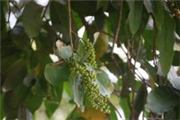
FLOWERS: tiny, in very big, spreading terminal heads, made up of numerous single tubular pale mauve or white flowers. There is an extra colour from purple-tipped leafy phyllaries around each flower head.
FRUIT: typical of the family, tiny dry seeds with white hairs at one end.
Uses
Medicine: leaves. https://www.prota4u.org/database/protav8.asp g=pe&p=Vernonia+auriculifera+Hiern
Agroforestry: planted as a fallow plant to improve the soil or as a shade-providing nurse tree.
The stems and leaves are used in hut-construction.
The leaves are also used for wrapping plant drugs to be roasted and used as a poultice.
Leaves are used as a substitute for toilet paper.
The stems are burnt as fuel.
The leaves and young twigs are eaten by domestic animals
The stems, leaves and flowers yield a dye.
Ecology
Native to Uganda . An East African shrub widely distributed at forest edges; often abundant in areas of wet montane forest but also found in woodland and derived grassland, riverine and lacustrine vegetation. In Uganda it often grows in abandoned banana plantations, scrubland and gaps in forests.
Management
Once sown let the shrub grow into a bush and harvest when ready. Fast growing; will provide wood fuel in 3-5 years.
Tree gallery
.jpg)

.jpg)